The Somerset Homeowner's Monthly Maintenance Checklist
Somerset houses earn their keep. Between the westerlies coming in off the Atlantic, the low ground of the Levels, and the wet combes running down off the Mendips, your gutters, render and heating system see more water than they would in most of the country. That isn't a reason to spend every weekend up a ladder. It's a reason to do small things often, in the right month, rather than finding a problem in February when nothing is dry enough to fix. What follows is a working year for a typical Somerset home — a lias stone cottage, a Victorian terrace in Taunton, a new build on the edge of a village. Ten minutes a month, plus a handful of bigger jobs, keeps the expensive repairs away.
Deep winter is for keeping the house warm and dry, not for painting. Start with the radiators. If the top of a radiator is cold and the bottom is hot, there's air in it — bleed it with a radiator key until water trickles out rather than hissing air. If a radiator is cold at the bottom instead, that's sludge, and that's a job for a plumber with a flush.
Check the pressure gauge on a combi boiler. Most sit somewhere around 1 to 1.5 bar when cold, so check your own manual for the figure yours wants. If you're topping it up every few weeks, stop and get it looked at; that pattern usually means a leak or a failing expansion vessel.
Then the condensate pipe — the white plastic pipe that runs from the boiler through an outside wall. In a hard frost it freezes and the boiler shuts down, often with a gurgling noise. Pouring warm, not boiling, water over the outside section usually gets it going again. A lagged pipe freezes far less often.
Damp checks matter most now. Pull wardrobes and beds a few centimetres away from external walls so air can move. Look at skirting boards and the corner of ceilings for dark patches, and press the back wall inside kitchen and bathroom cupboards. A little condensation on windows in the morning is normal in a well-sealed house. A puddle on the windowsill is not, and it's worth investigating ventilation.
Put your coat on and walk the outside of the house. Look up. You'll spot slipped tiles, a sagging gutter bracket and cracked render from ground level in about ninety seconds.
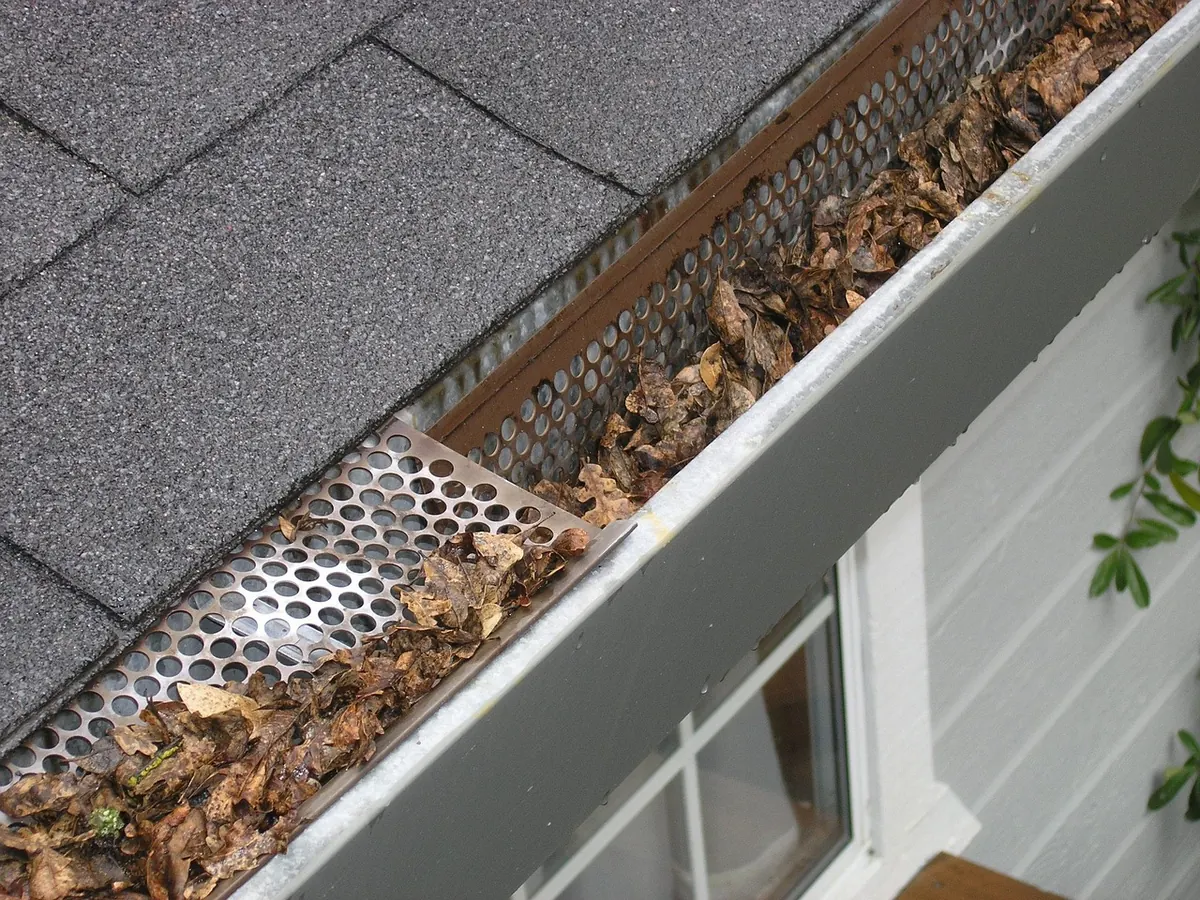
This is gutter month. Somerset grows moss and lichen generously, and if you have ash, sycamore or willow nearby, the gutters will be carrying more than rain. Clear the gutters and, just as importantly, the downpipes — a blocked downpipe shows itself as water running down the face of the wall.
Check the fall while you're there. Water should run steadily toward the outlet, not sit in the channel. If you can see green algae streaks or a stained band of render directly below the gutter line, the joint above is leaking. Catching that now means repainting a small patch rather than repointing a wall in autumn.
Then look at the ground. Clear gullies and check soakaways before the spring rain arrives, particularly in low-lying gardens where the water table does half the work for you. In the same pass, check fence posts and gate hinges — timber rots at ground level first, and a post that wobbles in March will be flat in a gale by November.
Now the weather is on your side. Paint window sills, external doors and sheds in settled dry conditions, ideally two coats, and avoid painting in direct hot sun — it skins over before it cures. Sand back any flaking edges first; paint over loose material is a job you'll repeat next year.
Run a finger along the sealant around window frames and door thresholds. If it's cracked, brittle or pulling away, cut it out and replace it with a decent exterior frame sealant. This is one of the cheapest draught and water fixes there is.
Decking deserves a look too. Lift a board or two if you can and check the joists underneath. Clean paving on north-facing paths where moss makes the surface genuinely slippery, and check outside taps and water butts for leaks before you rely on them in July.
Hot weather is a good time for the jobs nobody wants in winter. Open and close thermostatic radiator valves a couple of times so they don't seize shut over summer. Check loft ventilation — a baking loft traps heat and can drive condensation into roof timbers when the temperature drops again. Deal with any wasp nest near a doorway properly rather than with a broom; leave bees alone where you can.
This is also the month to treat timber, repair fence panels, and clear the gutters once more after the tree seed falls, so the autumn leaf drop starts from a clean channel.
Do these in order, before the first cold snap:
While you're in the loft, look at the underside of the roof felt for water staining, and check the chimney flashing if you can see it safely from a window.
Secure what the wind can move: fence panels, garden furniture, bins, trampolines. Check outdoor lighting cables for damage before you plug anything in for the season, and use an RCD-protected supply.
Damp indoors becomes the main event. Cooking, showering and drying laundry all put moisture into the air, and in a sealed house it lands on the coldest surfaces — usually external wall corners and window reveals. Use extractor fans, keep trickle vents open, put lids on pans, and ventilate briefly and widely rather than leaving a window ajar all day. If a patch of damp grows or smells musty no matter what you do, get it looked at rather than painting over it.
Whatever the month, this short circuit catches most problems early:
Plenty of this you can do yourself: gutters cleared from a stable ladder or with a gutter tool from ground level, a bit of painting, draught-proofing, replacing a silicone bead. Some of it you shouldn't. Any work on gas appliances needs a Gas Safe registered engineer, and electrical work that's notifiable should go to a registered electrician. If a job needs two people, a tower, or a head for heights you'd rather not test, that's the moment to call someone in. The point of a maintenance calendar isn't to turn you into a tradesperson. It's to put small jobs in front of you early, in the season when you can actually fix them.
Photo: stevepb / Pixabay
Previous Post
How to Fix a Squeaky Floorboard Without Lifting the Carpet
Next Post
Wall-Mounted TV Installation for Beginners: Studs, Brackets and Cable Management